
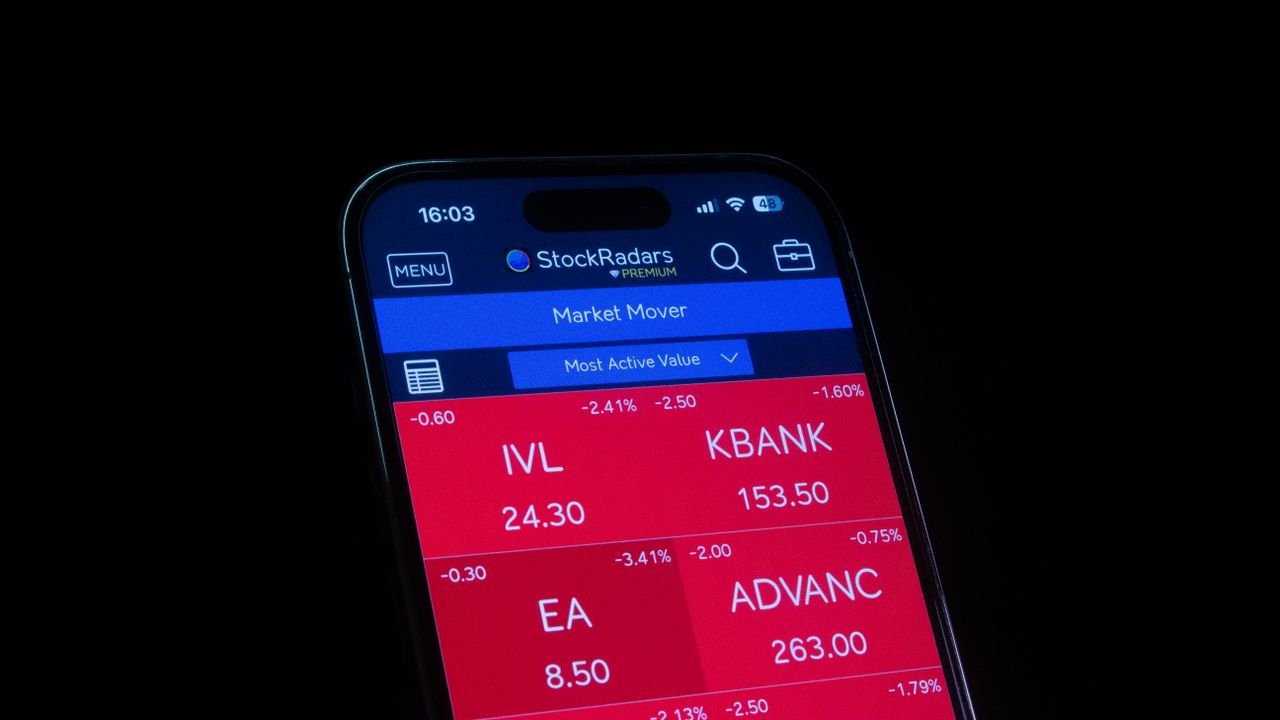
Financial markets are beginning the week under pressure from concerns about artificial intelligence spending, rising borrowing costs and geopolitical uncertainty, while fresh Chinese economic data has offered some support to the global outlook. On Monday, 19 October 2026, Asian share markets fell as investors assessed the scale of investment needed to build AI infrastructure and prepared for a busy week of corporate earnings.
For investors following market movers, the latest developments illustrate why share prices can change sharply even when there is no single event affecting every company. A technology firm facing questions about its spending plans may fall while a business reporting stronger profits rises. Meanwhile, movements in oil prices, government bond yields and currencies can influence markets well beyond the companies directly involved.
Market movers are the shares, sectors, commodities, currencies or economic developments experiencing significant price changes or attracting unusual trading activity. The term is also used for the news and events behind those movements. For UK readers, following market movers means looking beyond the daily direction of the FTSE 100 to understand what is driving individual shares and global investor sentiment.
The key is to distinguish a price movement from its cause. A rising share price does not necessarily mean a company has improved its long-term prospects, just as a market decline does not automatically indicate that an entire economy is weakening.
What are market movers?
Market movers are assets or developments that attract attention because of a significant change in price, trading activity or their potential effect on wider financial markets.
In share trading, the term often refers to the biggest percentage gainers and losers during a session. Financial websites also use it for companies releasing important results, announcing acquisitions, facing regulatory decisions or responding to changes in economic conditions.
A company can become a market mover after publishing its annual results, for example, if its profits differ substantially from what investors expected. A pharmaceutical business may move sharply following a significant clinical trial announcement, while an energy company could react to a change in crude oil prices.
The term also applies to wider economic developments. An unexpected inflation reading, an interest rate decision or a major change in trade policy can affect hundreds of companies at once.
Market movers are not necessarily the largest businesses or the most valuable shares. A smaller company can record a substantial percentage change following a single announcement, while a large company may influence an entire index because of its size.
Investors therefore need to consider both the scale of a movement and the context behind it. A 10% rise in a thinly traded share may reflect a relatively small amount of buying, whereas a more modest move in a major index constituent can have a wider effect on the market.
What is moving global markets on 19 October 2026?
The latest international market picture is being shaped by several competing forces, according to Reuters’ global markets report published on 19 October. Concerns about the cost and profitability of AI infrastructure have weighed on Asian shares, while falling oil prices and stronger-than-expected Chinese economic growth have provided contrasting signals.
AI investment and technology shares
Investors are questioning whether the revenues generated by artificial intelligence will eventually justify the enormous sums being spent on data centres, computing equipment and related infrastructure.
Reuters reported that Japan’s Nikkei 225 fell 1.2% on Monday, while South Korea’s benchmark lost 0.4% and Taiwan’s market declined 1.4%. The moves came after substantial losses in the previous week, with technology-related concerns weighing on sentiment.
The debate centres on the relationship between investment and future returns. Building AI infrastructure requires substantial upfront spending, and businesses may need years of revenue growth to recover those costs. Higher borrowing costs can make that calculation more difficult by increasing the expense of financing projects.
This does not mean all technology companies face the same outlook. Businesses supplying essential equipment, companies developing AI services and firms investing heavily in infrastructure have different financial positions and revenue models. Investors need to assess each business individually rather than treating the technology sector as a single investment.
Oil prices and geopolitical uncertainty
Oil prices also influenced market sentiment at the start of the week. Reuters reported that Brent crude futures fell 1.7% to $107.95 a barrel, while US crude futures declined 0.8% to $100.62. The report linked the fall partly to a temporary US waiver of some Russian sanctions, although President Donald Trump subsequently said a final decision had not been made.
Oil is an important market mover because it affects transport, manufacturing, energy production and household costs. Lower prices can reduce fuel and production expenses for some businesses, but they can also put pressure on the revenues of oil producers.
The effect on inflation is not automatic. Retail fuel prices, energy contracts, taxes, currency movements and other costs influence how quickly changes in crude prices reach consumers and businesses.
Geopolitical developments can also reverse market movements quickly. Reuters reported renewed concern after Iran said another tanker had struck a mine in the Strait of Hormuz, a key route for global energy shipments.
China’s economic growth
China provided a more positive signal. Official data cited by Reuters showed that the economy grew by 4.5% year on year in the third quarter of 2026, slightly exceeding forecasts. Retail sales rose 1.1%, while industrial output increased by 5.5%.
China matters to global markets because its demand for raw materials, industrial equipment, consumer products and energy affects companies across several continents. Stronger economic activity can support manufacturers and commodity producers, although the benefits vary according to their exposure to the Chinese economy.
The data did not prevent Chinese blue-chip shares from slipping 0.2% on Monday, according to Reuters. That contrast illustrates how investors can respond to several developments simultaneously rather than focusing on one economic indicator.
For UK investors, these international movements matter because many companies listed in London earn a substantial proportion of their revenue overseas. The FTSE 100’s direction can therefore reflect developments in global trade, commodities and currencies as well as conditions within Britain.
The main factors that move share prices
Understanding the reasons behind market movements helps explain why two companies in the same industry can respond differently to the same news.
Company earnings and financial forecasts
Corporate earnings are among the most closely watched market events. Investors examine revenue, profit, cash flow, debt and management forecasts to assess whether a business is performing as expected.
A company can report higher profits and still see its share price fall if investors had expected a stronger result. Conversely, a business reporting lower profits may rise if the figures are better than anticipated or management provides a more positive outlook.
This is why headlines about a company beating or missing forecasts need context. The market’s response depends not only on what happened during the previous quarter but also on what investors believe will happen next.
Interest rates and inflation
Interest rates influence borrowing costs, savings returns and the value investors place on future profits. When central banks raise rates, companies may face more expensive financing, while households can have less disposable income if mortgage and loan payments increase.
Higher interest rates can also reduce the relative appeal of shares compared with lower-risk interest-bearing assets. Businesses whose valuations depend heavily on profits expected many years in the future can be particularly sensitive to changes in borrowing costs and discount rates.
Inflation matters because it affects costs, wages, consumer demand and monetary policy. Companies may struggle when expenses rise faster than the prices they can charge customers. Others may be able to pass on higher costs, depending on competition and demand.
Investors pay close attention to inflation releases and central bank decisions because both can alter expectations about future interest rates.
Currency movements
Exchange rates can affect businesses that earn money abroad or buy goods and materials from overseas suppliers.
A weaker pound can increase the sterling value of overseas revenue when companies convert foreign earnings back into UK currency. However, it can also make imported products, fuel and components more expensive.
The effect depends on a company’s international exposure, costs, debt and currency hedging arrangements. A change in the pound’s value is therefore not automatically positive or negative for every FTSE 100 company.
Political decisions and global events
Elections, trade restrictions, sanctions, conflicts and regulatory changes can alter expectations about business costs and demand.
An announcement may affect a particular company directly, such as a new rule governing its industry. It may also influence an entire sector through changes to taxes, trade flows or access to raw materials.
Markets often react before a policy takes effect because share prices reflect expectations about future conditions. However, the initial response can change as more details emerge or investors reassess the likely economic impact.
How to identify the biggest market movers
Investors can use financial news services, stock exchange information and market-data platforms to identify the shares experiencing the largest price changes.
A typical market-movers screen lists the biggest gainers, biggest fallers and most actively traded shares. These categories answer different questions. Percentage gainers show which shares have risen most relative to their previous closing prices, while losers identify the largest declines. Most-active lists focus on trading volume or value.
The distinction matters because the biggest percentage move is not always the most significant development for the wider market. A small company rising 15% may have little effect on the FTSE 100, while a modest decline in a large constituent could exert greater influence on the index.
For UK readers, a useful daily review combines the FTSE 100 and FTSE 250 with major company announcements, economic releases and international market updates. Checking the reason behind a share’s movement is more informative than relying on a list of winners and losers alone.
What pre-market movers tell investors
Pre-market movers are shares that change significantly before the regular trading session begins. The term is particularly common in the US, where investors can react to overnight company announcements and economic data before the New York Stock Exchange and Nasdaq open.
IG’s guide to pre-market trading explains that earnings announcements, broker research, economic releases and global events can all contribute to these movements. It also warns that pre-market prices can be unreliable indicators of where a share will trade once the regular session opens.
Trading before the main session can involve lower liquidity, wider bid-ask spreads and greater price volatility. In simple terms, fewer available buyers and sellers can make it harder to trade at the displayed price.
A share that rises sharply before the opening bell may fall back when more participants enter the market. Equally, a decline can deepen if the wider market reacts negatively to the news.
Pre-market data is therefore best treated as an early indication of investor sentiment rather than a guarantee of the day’s direction.
Why the FTSE 100 does not tell the whole story
The FTSE 100 tracks 100 of the largest eligible companies listed on the London Stock Exchange by market capitalisation, subject to the index’s rules. It is a widely used measure of the performance of major UK-listed businesses, but it is not a complete representation of the British economy.
Many FTSE 100 companies operate internationally. Their results can depend on commodity prices, overseas demand, currency movements and economic conditions outside the UK. A strong day for mining or energy shares can help the index even if some domestic businesses are struggling.
The FTSE 250 provides a different perspective, covering the next tier of eligible companies by market capitalisation below the FTSE 100. Its constituents often have greater exposure to the UK economy, although the index also contains businesses with significant overseas operations.
Neither index captures every movement in the market. Individual shares can rise while the broader index falls, and sectors can move in opposite directions.
Investors should also distinguish between an index’s points movement and its percentage change. A fall of 100 points has a different significance when an index stands at 5,000 than when it stands at 10,000. Percentage changes make comparisons across different index levels easier.
What market movers mean for UK investors
Market movements can help investors understand changing expectations, but they do not provide a reliable shortcut to deciding which shares to buy or sell.
A sharp rise may reflect stronger earnings, a takeover offer or a temporary surge in demand. It may also follow a speculative rush that loses momentum once the initial excitement fades. Similarly, a falling share price could reflect deteriorating business prospects or a short-term reaction to news that has little effect on long-term earnings.
The Financial Conduct Authority advises investors to understand investment risk and recognise that the value of investments can fall as well as rise. Returns are not guaranteed, and investors may receive less than they originally invested.
A disciplined approach starts with the underlying information. Investors can examine company announcements, financial statements, economic data and credible reporting to establish why a price has changed. They should also consider their time horizon, financial circumstances and ability to withstand losses.
Short-term trading carries additional risks. Rapid price changes can encourage decisions based on fear of missing out or concern about further losses. Leveraged products, including contracts for difference and spread bets, can magnify losses as well as gains.
For people investing over the long term, a daily list of market movers may be useful for understanding the wider economic picture, but it should not replace research into individual investments or a diversified investment strategy.
What to watch next
The coming days are likely to bring further attention to corporate earnings, particularly from major technology companies. Reuters reported on 19 October that investors were preparing for results from Meta, Tesla and other businesses as questions continued over the scale and profitability of AI investment.
Investors will also be watching developments in energy markets, geopolitical tensions and economic data from major economies. Changes in bond yields and expectations for interest rates could influence how markets value future company profits.
For UK markets, the important question is how these global developments interact with company-specific results and domestic economic conditions. The FTSE 100 may respond differently from smaller UK-listed companies, while individual sectors can move against the wider market.
The most useful market-movers coverage explains both what has changed and why it matters. By checking the underlying announcement, comparing a company’s performance with expectations and recognising the limits of short-term price signals, readers can better understand market activity without treating every movement as a prediction of what comes next.
[…] value remains an important indicator for British investors following the cryptocurrency market. However, the price of one bitcoin tells only part of the […]